
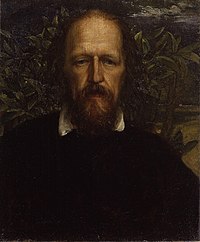
Today marks the 200th anniversary of the birth of one of Britain’s greatest poets, Alfred Tennyson, author of many immortal phrases: ‘Theirs not to reason why/Theirs but to do and die – ‘Tis better to have loved and lost/than never to have loved at all’ to select but two.
We lamented late last year the almost complete absence of radio and TV programmes marking John Milton’s quartercentenary, bar the broadcast by BBC Radio 3 of Anton Lesser’s brilliant reading of Paradise Lost (actually, just a transmission of a recording by the budget CD label Naxos).
Tennyson, who ranks closely to Milton and who similarly shed light on the concerns of his time, in his case, the conceits and strangely morbid optimism of High Victorian society, has fared slightly better. Perhaps his work is considered more digestible.
Tonight, on Radio 3, Kit Wright considers the tender, lyrical Tears, Idle Tears, to be followed by similar analyses of Ulysses and The Kraken, by Vicki Feaver and Gwyneth Lewis respectively.
Tennyson’s Maud, poorly received on its release in 1855 has already received a terrific production on the same channel and his fellow Poet Laureate, Andrew Motion, is to champion Tennyson on Radio 4’s Great Lives. There are few better places to start than Tennyson if one wishes to understand the Victorian mentality. The poetry is pretty good too.
The works of Charles Dickens, a contemporary of Tennyson, also provide insights into the Victorian mentality. For further information, read our article Dickens and His Readers

