
The ever-entertaining Ronald Hutton, author of this month’s cover article on the Druids, talks about that subject on tonight’s Night Waves, BBC Radio 3, 9.15pm.
Monday, 27 April 2009

Friday, 24 April 2009
Some Personal Favourites
Over on our books blog, History Today readers who send us their all-time favourite history books now have the chance to win the best new works we review on the website each month. For the record, here are mine, some tomes dustier than others...
 1. David Landes, The Wealth and Poverty of Nations (Abacus, 1999)
Why, after the Industrial Revolution, some countries gained great prosperity and other sank into penury. The availability of clocks and spectacles can be more important than economic resources but, Landes concludes, it is better to ‘live to work, than work to live’. Timely advice.

2. Thucydides, The Peloponnesian War (Penguin Classics, 2000)
The long conflict between Greece and Sparta that took place in the fifth century BC is the subject of one of the earliest – and still one of the best – narrative histories ever written.

3. Christopher Bayly and Tim Harper, Forgotten Armies: Britain’s Asian Empire and War with Japan (Penguin, 2005)
A magisterial, sometimes irreverent account of the collapse of British possessions in Asia during the Second World War, and the desperate, grubby attempt to claw them back.

4. John Adamson, The Noble Revolt: The Overthrow of Charles I (Phoenix, 2009)
First in a proposed two volume history of the English Civil Wars by one of our finest young historians. Combines riveting narrative with cutting-edge scholarship. Has transformed our understanding of 17th-century Britain.

5. Derek Birley, A Social History of English Cricket (Aurum, 2003)
Engrossing account of the origins and development of the most beautiful, complex and compelling game ever invented. The pen portraits of the great and good are vivid and, in the case of Lord Hawke, hilarious.

6. Raphael Samuel, Island Stories (Verso, two vols, 1996)
The much-missed Samuel was that rarity, a left-wing historian who loved his country, though was never afraid to cast a pitiless eye upon its foibles and contradictions. A masterclass in clarity and incision.
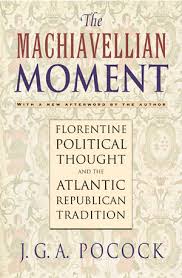
7. J.G.A. Pocock, The Machiavellian Moment: Florentine Political Thought and the Atlantic Republican Tradition (Princeton, 1975)
Classic study of how Italian political thought was transmitted to the New World via early modern England.

8. Jenny Uglow, The Lunar Men: The Friends Who Made the Future (Faber, 2003)
Learned but hugely entertaining account of the five amateur scientists of the 18th century who met in Birmingham’s Soho House on nights with a full moon and whose ideas gave birth to the modern world.
 9. Michael Burleigh, The Third Reich: A New History (Pan, 2001)
The best book ever written in English on a subject about which far too many words have been spilt. Moral, caustic and profound.
 10. Bernard Porter, The Lion’s Share: A Short History of British Imperialism, 1850-2004 (Longman, 2004)
Single-volume overview of British imperialism that manages to be entertaining, illuminating and wonderfully personal. The latest edition contains the author’s pithy observations on Britain’s status post-Iraq War.
1. David Landes, The Wealth and Poverty of Nations (Abacus, 1999)Why, after the Industrial Revolution, some countries gained great prosperity and other sank into penury. The availability of clocks and spectacles can be more important than economic resources but, Landes concludes, it is better to ‘live to work, than work to live’. Timely advice.
2. Thucydides, The Peloponnesian War (Penguin Classics, 2000)
The long conflict between Greece and Sparta that took place in the fifth century BC is the subject of one of the earliest – and still one of the best – narrative histories ever written.
3. Christopher Bayly and Tim Harper, Forgotten Armies: Britain’s Asian Empire and War with Japan (Penguin, 2005)
A magisterial, sometimes irreverent account of the collapse of British possessions in Asia during the Second World War, and the desperate, grubby attempt to claw them back.
4. John Adamson, The Noble Revolt: The Overthrow of Charles I (Phoenix, 2009)
First in a proposed two volume history of the English Civil Wars by one of our finest young historians. Combines riveting narrative with cutting-edge scholarship. Has transformed our understanding of 17th-century Britain.
5. Derek Birley, A Social History of English Cricket (Aurum, 2003)
Engrossing account of the origins and development of the most beautiful, complex and compelling game ever invented. The pen portraits of the great and good are vivid and, in the case of Lord Hawke, hilarious.
6. Raphael Samuel, Island Stories (Verso, two vols, 1996)
The much-missed Samuel was that rarity, a left-wing historian who loved his country, though was never afraid to cast a pitiless eye upon its foibles and contradictions. A masterclass in clarity and incision.
7. J.G.A. Pocock, The Machiavellian Moment: Florentine Political Thought and the Atlantic Republican Tradition (Princeton, 1975)
Classic study of how Italian political thought was transmitted to the New World via early modern England.
8. Jenny Uglow, The Lunar Men: The Friends Who Made the Future (Faber, 2003)
Learned but hugely entertaining account of the five amateur scientists of the 18th century who met in Birmingham’s Soho House on nights with a full moon and whose ideas gave birth to the modern world.
9. Michael Burleigh, The Third Reich: A New History (Pan, 2001)The best book ever written in English on a subject about which far too many words have been spilt. Moral, caustic and profound.
10. Bernard Porter, The Lion’s Share: A Short History of British Imperialism, 1850-2004 (Longman, 2004)Single-volume overview of British imperialism that manages to be entertaining, illuminating and wonderfully personal. The latest edition contains the author’s pithy observations on Britain’s status post-Iraq War.
Monday, 20 April 2009
William Blake at Tate Britain
A small but fascinating new exhibition opens at Tate Britain on April 20th. William Blake’s 1809 Exhibition recreates the only solo show the great English artist, poet and political radical mounted in his lifetime. Held above his brother’s shop near Golden Square in London’s Soho, a short walk from where Blake was born, it was not a critical success. Robert Hunt, writing in the contemporary journal The Examiner described the show as the work of ‘an unfortunate lunatic, whose personal inoffensiveness secures him from confinement’ consisting of a ‘few wretched pictures, some of which are unintelligible allegory . . . very badly drawn.’
The exhibition takes place in a single room. Ten of the original 16 works are on display; the other six are marked by white spaces representing works that have since been lost. There are a number of very striking images, such as Christ in the Sepulchre, Guarded by Angels, a watercolour from 1805 of a design for an altar that was never built; Blake despaired of England’s inability to match Italy and France in the field of public art. But the strangest works are two images of English heroes. The Spiritual Form of Nelson Guiding Leviathan and The Spiritual Form of Pitt Guiding Behemoth are, apparently, celebrations of English heroes from Blake’s time, though so uncharacteristic are these laudatory works of war and power that the curator, Martin Myrone, still wonders if they are in some sense graphic satires. They certainly force us to look at Blake anew. The exhibition, which is free, runs to October 4th.
The exhibition takes place in a single room. Ten of the original 16 works are on display; the other six are marked by white spaces representing works that have since been lost. There are a number of very striking images, such as Christ in the Sepulchre, Guarded by Angels, a watercolour from 1805 of a design for an altar that was never built; Blake despaired of England’s inability to match Italy and France in the field of public art. But the strangest works are two images of English heroes. The Spiritual Form of Nelson Guiding Leviathan and The Spiritual Form of Pitt Guiding Behemoth are, apparently, celebrations of English heroes from Blake’s time, though so uncharacteristic are these laudatory works of war and power that the curator, Martin Myrone, still wonders if they are in some sense graphic satires. They certainly force us to look at Blake anew. The exhibition, which is free, runs to October 4th.
Monday, 6 April 2009
Confidence in a Crisis
 Dan Jones, a Cambridge protégé of Davis Starkey, has written a compelling new study of the Peasants Revolt called Summer of Blood which is soon to be published by HarperPress. Though wary of anachronism, I tried to draw parallels with the revolt and present unrest, typified by the strange and muddled protests that took place in London last week as the G20 conference was being held. Many media commentators have been warning of impending social unrest caused by the economic crisis. But the peasants of 1381 were emboldened by a period of relative prosperity that followed the reduction in labour surplus caused by the Black Death. And if we look back to the most recent period of widespread social unrest, the late 1960s and early 1970s, that was a period of relative affluence. It appears that confidence rather than desperation is a major factor in manufacturing rebellion. People in fear of losing their jobs are likely to become more conservative, more risk averse, finding comfort in a stronger state, protectionism and appeals to a mythical national past. That path has its own considerable dangers if the example of the 1930s is anything to go by.
Wednesday, 1 April 2009
Baroque: Serious Global Ideals
The V&A’s spring exhibition, Baroque: Style in the Age of Magnificence, opens this Saturday (April 4th). The curators, Michael Snodin and Nigel Llewellyn, stress the international nature of the Baroque, arguing that it was the first truly global style. The Baroque ideal, described by Snodin as ‘seriously serious’ as opposed to the ‘seriously unserious’ age of the Rococo that followed, was spread around the world by two great powers: the Roman Catholic Church of the Counter-Reformation and Absolute Monarchy, most notably, Louis XIV whose Palace of Versailles is emblematic of the age and whose inner sanctum, his closet, is recreated in the final rooms of the exhibition.
The international nature of the Baroque is made explicit in the first room where stands a screen made by Chinese craftsmen working in what is now Indonesia (and was then Batavia) for the headquarters of the Dutch East India Company. The Baroque lends itself to display and this becomes apparent in the section devoted to the theatre, more specifically the then-new medium of opera. It’s a cloying, dark room, a little like stepping into a velvet glove, with a stage and videos of performances of operas by Caldara and Carissimi, as well as the ripe, perfumed, often overbearing sound of Louis XIV’s court composer, Lully.
Though the argument of the curators points to Italy and then France as the originators of the Baroque, there are beautiful religious objects, including one spectacular gilded shrine, from as far afield as Mexico and Brazil. It is in Latin America that the Baroque attained its final flowering in the late 18th century. The central ritual of the Catholic Church, the High Mass, gets a room all to itself with a fascinating display of interior fittings on loan from the Chapel of St John the Baptist in the Church of Sao Roque in Lisbon, including crosses, candelabra and vestments. Intriguingly, a High Mass, performed at the London Oratory church, is relayed on video, as if it were an anthropological study of exotica. Perhaps it is now.
One of the most striking things about this remarkable exhibition, and there are many, is the relative absence of the English Baroque. It seems odd, for instance, that the only acknowledgement towards the finest collection of Baroque churches outside Rome, is a model of St Mary le Bow. But, from May, the V&A makes amends with its smaller exhibition, Europe and the English Baroque: Architecture in England 1660-1715, which pays especial attention to the work of architects such as Christopher Wren, Nicholas Hawksmoor and John Vanbrugh.
A small baptism chamber from Norway demonstrates that the Baroque spread beyond the Catholic world into Protestant northern Europe, where in music it arguably surpassed the south, not least with Bach’s settings of the Passion. This year sees the 350th anniversary of the birth of Purcell and the 250th anniversary of the death of Handel, both of whose work is performed in abundance throughout the year. If ever there was a time to get to grips with the Baroque aesthetic, it is now. The new V&A exhibition is an excellent place to begin.
The international nature of the Baroque is made explicit in the first room where stands a screen made by Chinese craftsmen working in what is now Indonesia (and was then Batavia) for the headquarters of the Dutch East India Company. The Baroque lends itself to display and this becomes apparent in the section devoted to the theatre, more specifically the then-new medium of opera. It’s a cloying, dark room, a little like stepping into a velvet glove, with a stage and videos of performances of operas by Caldara and Carissimi, as well as the ripe, perfumed, often overbearing sound of Louis XIV’s court composer, Lully.
Though the argument of the curators points to Italy and then France as the originators of the Baroque, there are beautiful religious objects, including one spectacular gilded shrine, from as far afield as Mexico and Brazil. It is in Latin America that the Baroque attained its final flowering in the late 18th century. The central ritual of the Catholic Church, the High Mass, gets a room all to itself with a fascinating display of interior fittings on loan from the Chapel of St John the Baptist in the Church of Sao Roque in Lisbon, including crosses, candelabra and vestments. Intriguingly, a High Mass, performed at the London Oratory church, is relayed on video, as if it were an anthropological study of exotica. Perhaps it is now.
One of the most striking things about this remarkable exhibition, and there are many, is the relative absence of the English Baroque. It seems odd, for instance, that the only acknowledgement towards the finest collection of Baroque churches outside Rome, is a model of St Mary le Bow. But, from May, the V&A makes amends with its smaller exhibition, Europe and the English Baroque: Architecture in England 1660-1715, which pays especial attention to the work of architects such as Christopher Wren, Nicholas Hawksmoor and John Vanbrugh.
A small baptism chamber from Norway demonstrates that the Baroque spread beyond the Catholic world into Protestant northern Europe, where in music it arguably surpassed the south, not least with Bach’s settings of the Passion. This year sees the 350th anniversary of the birth of Purcell and the 250th anniversary of the death of Handel, both of whose work is performed in abundance throughout the year. If ever there was a time to get to grips with the Baroque aesthetic, it is now. The new V&A exhibition is an excellent place to begin.
A History of White Males?
Read the article by Kate Williams in The Telegraph.
Subscribe to:
Posts (Atom)