Showing posts with label Museums. Show all posts

Thursday, 10 December 2009

Ben Macintyre on the Rosetta Stone

Ben Macintyre comments today in the Times on the saga of the Rosetta Stone's disputed ownership:

Instead of debating ownership and trying to impose modern notions of political sovereignty on ancient cultural patrimony, the argument should be about how to bring the world’s cultural riches to the widest possible audience, regardless of where they physically reside.


Happy to observe we are in agreement over yesterday's post!


Wednesday, 25 November 2009

A History of the World

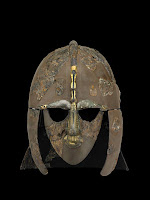
Sutton Hoo Helmet, 7th century AD, Suffolk, England. This iconic object from the origins of English history reveals the story of how the first English kings were always part of a larger European community. © The Trustees of the British MuseumThe launch of a new collaboration between the British Museum and the BBC, the ambitiously titled, A History of the World took place, appropriately, in the Enlightenment Room of the BM this morning. It’s actually a History of the World ‘in 100 objects’ and the daily, 15-minute programmes will be broadcast on Radio 4 from January 18th 2010. Each one focuses on a particular object from the museum’s collection and the series will cover a wide chronological and geographical period.

Neil MacGregor, the BM’s director talked of moving away from history centred on the Mediterranean – once, literally, the ‘middle of the earth’ – to create a genuinely global history, beginning with an ancient chopper from the Olduvai Gorge in modern-day Tanzania, that tells us much about the ideas of early man. Some of the objects are especially beautiful: the colossal statue of Rameses II, for example; others, less so, but huge in their importance. Three rather ugly stubs of metal turn out to be remnants of the first transatlantic cable, created as one single 4,000-mile long object created in east Birmingham, transported to Bristol in a remarkable feat of logistics, and then laid along the bed of the ocean to join the Old World with the New for the first time. The series will be supported by an impressive interactive website with high resolution images and a children’s TV series, Relic: Guardians of the Museum.

What is especially encouraging about this series from a historical point of view is that it reaches wide and far. I have bemoaned before (and will do so again) about the elision of history with current affairs, a trend of which BBC television (and not radio) has been especially guilty. But this is a wholly admirable adventure, real history despite the inevitable roping in of ‘celebrities’: though a definition of celebrity capacious enough to include Seamus Heaney reading his translation of Beowulf, Wole Soyinka and Madhur Jaffrey is one I can live with.


Neil MacGregor recording the A history of the World series. © The Trustees of the British MuseumOne caveat was raised at the press conference. After all the talk of outreach and accessibility, why is A History of the World not being broadcast on BBC1 television, easily the BBC channel with the largest audience? Mark Damazer, controller of Radio 4, a station on a roll at the moment, talked of budgetary limitations. But the truth is, the BBC and the BM know their audience – one reason why they are so good at what they do – and it is predominantly made up of the ‘interested’ middle classes. With a third of schools failing officially to provide a decent standard of education, that’s not going to change anytime soon.

Talking of education, in the Times today, History Today contributor Andrew Roberts provides a crash course in history books for Baroness Ashton, the EU’s new foreign affairs supremo. Any list that contains Chris Wickham’s magisterial study The Inheritance of Rome (Penguin) and A World by Itself (Heinemann), the forthcoming history of the British Isles edited by Jonathan Clark (which he discusses in the January edition of History Today) gets my thumbs up.


Tuesday, 10 November 2009

The London History Festival

History Today contributor Tristram Hunt writes today in the Guardian on the Staffordshire Hoard and the importance of it being sited permanently in what was once Mercia (ie the West Midlands and Staffordshire). He appeals to the wealthy burghers of the regions (yes, they do still exist, despite recession and the collapse of manufacturing in the region) to put their hands deep in the pockets and give the Hoard a home worthy of its historic importance:
‘ Those Black Country industrialists, Staffordshire landowners, Sutton Coldfield professionals and Birmingham business people need to find their inner Anglo-Saxon. For what the hoard reveals is that their seventh-century forebears, those righteous conquerors and wealthy warlords, were determined to use their prosperity to support art, crafts and design. These treasures, with their eagle miniatures, biblical inscriptions and thousands of inlaid garnets, show a kingdom replete with affluence and cultural confidence. The West Midlands wealthy have an unprecedented opportunity to ensure that future generations have ready access to this incredible insight into their identity and heritage.'

Tonight, the BBC’s foreign correspondent David Loyn, who writes on Afghanistan in the forthcoming issue of History Today, is in conversation with Stephen Robinson, Stephen Grey and Colin Freeman, Chief Foreign Correspondent for the Sunday Telegraph (who was freed from the clutches of Somali pirates earlier this year) at Kensington Central Library. The distinguished panel will discuss the history of war reporting. It’s part of the first and very successful London History Festival which concludes on Thursday when I talk to Simon Scarrow, Patrick Mercer MP and Saul David about their recent forays into historical fiction.

Go to www.londonhistoryfestival.com for full details.
Tristram Hunt describes how Friedrich Engels financed the research behind his friend Karl Marx’s epic critique of the free market, Das Kapital, in No Marx Without Engels

Tuesday, 3 November 2009

Where Will the Hoard Call Home?


A small but exquisite selection of objects from the Staffordshire Hoard go on temporary public display today in Gallery 37 of the British Museum today.

It coincides with the launch of the Portable Antiquities and Treasure Annual Report 2007, the scheme, unique in Europe, which made possible the acquisition, examination and evaluation of the hoard. The display also includes a number of objects whose discovery was recorded in 2007 including a Roman copper-alloy figure of Cautopates, one of the attendants of the god Mithras, who was popular with Roman soldiers stationed in Britain; selections from the 10th-century Viking Hoard unearthed in the Vale of York, including Carolingian, Islamic and Anglo-Saxon coins; and a medieval silver piedfort – possibly a reckoning counter for officials - from the mid-1350s and struck in the name of Edward III as Duke of Aquitaine.

At the press conference, it was confirmed that the Staffordshire Hoard will find a permanent home in the West Midlands, though such is its size, the British Museum is always likely to have a selection on display. Staff from Birmingham City Museum and Art Gallery (BMAG) and the Potteries Museum in Stoke on Trent are working on those long-term proposals now. For curators, this is a once in a lifetime opportunity, as Rita McLean, Head of Birmingham Museums and Heritage, was eager to stress.

Monday, 28 September 2009

Why Are Museums Free?

Further to issues raised by our previous posts on the British Museum’s new Moctezuma exhibition, Ian Jack also questions the free entry policy of Britain’s major museums, while Philip Hensher, not a man to mince his words, launches a caustic critique of what we now call Mexica culture, especially its propensity for human sacrifice.

Wednesday, 23 September 2009

Today I attended the press preview of the British Museum’s new exhibition Moctezuma: Aztec Ruler. I have been somewhat underwhelmed by the BM’s series of exhibitions exploring power and empire and this, the fourth in the series, is no different. Moctezuma (that’s the Spanish spelling, which is more accurate than the English ‘corruption’ apparently) emerges as a very insubstantial figure: not even the circumstances of his death are really understood.

A rather embarrassing, much pitied figure in Mexico, his status as a ruler appears to owe a great deal to European ideals of the ‘Noble Savage’. Even so, there are many lovely objects to admire: a delicate obsidian knife (too delicate for human sacrifice); wonderful turquoise masks (though the best is one from the BM’s permanent collection); plus a fascinating model of the sacred centre of Moctezuma’s capital; an array of supremely strange gods; and some very interesting explanations of the Mexica’s highly complex calendar.

‘Mexica?’ you ask. Well that’s the name (pronounced ‘Mesheeka’) that the Aztecs (sorry, Mexica) knew themselves by, as did their Spanish conquerors, and it is, of course, after which Mexico is named. So why is the exhibition called Moctezuma: Aztec Ruler? Presumably because the BM thinks punters won’t know who the Mexica were but will hand over a scandalous £12 (yes, £12!) for the privilege of getting intimate with an Aztec. Then they’ll emerge from the Reading Room having considered the fate of Moctezuma only to be bombarded with stacks of expensive tat, with chocolate to the fore (after all the often patronising audio commentary to the exhibition, with its references to ‘brave Moctezuma’, appears to be aimed at children).

Would it not be better for the BM, an institution I cherish, to charge ALL visitors £2 to enter the permanent exhibitions and, say, £5 to special exhibitions, rather than charge £12 to see a display such as Moctezuma?

The exhibition opens tomorrow.

Thursday, 14 May 2009

Mobile Culcha


Marcel Berlins has a timely piece in the Guardian today on the ubiquity of mobile phones in museums; not used for conversation, of course, but as cameras. The British Museum is plagued by this phenomenon, as is the V&A’s current Baroque exhibition; of tourists standing arms outstretched capturing the image of an object that they will no doubt never look at again. If they were to, they would be better off buying a postcard, contributing to the museum’s coffers in the process.

What is worse, as Berlins observes, are visitors having their picture taken before an object – the Rosetta Stone, for example – to prove they were there. It’s OK, we believe you; we’d be more impressed if you developed your memory beyond the capacity of a goldfish. Perhaps museum staff should point such purveyors of rudeness in the direction of Frances A Yates classic The Art of Memory in which the great scholar elucidates the mnemonic techniques employed by the likes of Dante and Cicero. Then again, museum authorities could just take the sensible and welcome step to ban the use of mobiles for any purpose within their confines, just as classical music venues and theatres do. Or would the current ‘culcha’ secretary, Andy Burnham, override such restrictions on ‘access’ to the mnemonically impaired?

Monday, 20 April 2009

William Blake at Tate Britain

A small but fascinating new exhibition opens at Tate Britain on April 20th. William Blake’s 1809 Exhibition recreates the only solo show the great English artist, poet and political radical mounted in his lifetime. Held above his brother’s shop near Golden Square in London’s Soho, a short walk from where Blake was born, it was not a critical success. Robert Hunt, writing in the contemporary journal The Examiner described the show as the work of ‘an unfortunate lunatic, whose personal inoffensiveness secures him from confinement’ consisting of a ‘few wretched pictures, some of which are unintelligible allegory . . . very badly drawn.’

The exhibition takes place in a single room. Ten of the original 16 works are on display; the other six are marked by white spaces representing works that have since been lost. There are a number of very striking images, such as Christ in the Sepulchre, Guarded by Angels, a watercolour from 1805 of a design for an altar that was never built; Blake despaired of England’s inability to match Italy and France in the field of public art. But the strangest works are two images of English heroes. The Spiritual Form of Nelson Guiding Leviathan and The Spiritual Form of Pitt Guiding Behemoth are, apparently, celebrations of English heroes from Blake’s time, though so uncharacteristic are these laudatory works of war and power that the curator, Martin Myrone, still wonders if they are in some sense graphic satires. They certainly force us to look at Blake anew. The exhibition, which is free, runs to October 4th.

Wednesday, 1 April 2009

Baroque: Serious Global Ideals


The V&A’s spring exhibition, Baroque: Style in the Age of Magnificence, opens this Saturday (April 4th). The curators, Michael Snodin and Nigel Llewellyn, stress the international nature of the Baroque, arguing that it was the first truly global style. The Baroque ideal, described by Snodin as ‘seriously serious’ as opposed to the ‘seriously unserious’ age of the Rococo that followed, was spread around the world by two great powers: the Roman Catholic Church of the Counter-Reformation and Absolute Monarchy, most notably, Louis XIV whose Palace of Versailles is emblematic of the age and whose inner sanctum, his closet, is recreated in the final rooms of the exhibition.

The international nature of the Baroque is made explicit in the first room where stands a screen made by Chinese craftsmen working in what is now Indonesia (and was then Batavia) for the headquarters of the Dutch East India Company. The Baroque lends itself to display and this becomes apparent in the section devoted to the theatre, more specifically the then-new medium of opera. It’s a cloying, dark room, a little like stepping into a velvet glove, with a stage and videos of performances of operas by Caldara and Carissimi, as well as the ripe, perfumed, often overbearing sound of Louis XIV’s court composer, Lully.

Though the argument of the curators points to Italy and then France as the originators of the Baroque, there are beautiful religious objects, including one spectacular gilded shrine, from as far afield as Mexico and Brazil. It is in Latin America that the Baroque attained its final flowering in the late 18th century. The central ritual of the Catholic Church, the High Mass, gets a room all to itself with a fascinating display of interior fittings on loan from the Chapel of St John the Baptist in the Church of Sao Roque in Lisbon, including crosses, candelabra and vestments. Intriguingly, a High Mass, performed at the London Oratory church, is relayed on video, as if it were an anthropological study of exotica. Perhaps it is now.

One of the most striking things about this remarkable exhibition, and there are many, is the relative absence of the English Baroque. It seems odd, for instance, that the only acknowledgement towards the finest collection of Baroque churches outside Rome, is a model of St Mary le Bow. But, from May, the V&A makes amends with its smaller exhibition, Europe and the English Baroque: Architecture in England 1660-1715, which pays especial attention to the work of architects such as Christopher Wren, Nicholas Hawksmoor and John Vanbrugh.

A small baptism chamber from Norway demonstrates that the Baroque spread beyond the Catholic world into Protestant northern Europe, where in music it arguably surpassed the south, not least with Bach’s settings of the Passion. This year sees the 350th anniversary of the birth of Purcell and the 250th anniversary of the death of Handel, both of whose work is performed in abundance throughout the year. If ever there was a time to get to grips with the Baroque aesthetic, it is now. The new V&A exhibition is an excellent place to begin.

Tuesday, 31 March 2009

Masterpieces of Medieval Art

At the weekend, I visited the British Museum’s newly opened Paul and Jill Ruddock Gallery of Medieval Europe. Regular visitors to the BM won’t see anything new on display, but they will see a coherent and informative collection of medieval artefacts put together by curator James Robinson (whose Masterpieces of Medieval Art, published by the BM, is a superb commentary on the display). The Lewis Chessmen finally gain the prominence they deserve, but my own personal favourite from the gallery is the Dunstable Swan Jewel. This exquisite white enamelled livery badge dates from about 1400. The swan was associated with the House of Lancaster. It has a delicacy and fragile beauty that mirrors the National Gallery’s Wilton Diptych from the same period and reminds us that the Middle Ages were not all tenebrous gloom.

"The permanent collections are the great strength of the British Museum"
What was most encouraging was the number of children at the gallery, seemingly enraptured by the array of fascinating material, from great broadswords to medieval tiled floors, all clearly explained in language that was anything but patronising. In many ways, the permanent collections, with which one develops a strong relationship over time, are the great strength of the BM; the blockbuster exhibitions are often expensive and cramped. There has been much concern about the neglect of medieval history in schools. The Paul and Jill Ruddock Gallery (he’s chairman of the V & A and an ex-Goldman Sachs banker) offers a riposte to those who would marginalise this fascinating period.

There’s another excellent exhibition on around the corner from the BM, at the Foundling Hospital, Brunswick Square. 'Handel the Philanthropist', a small exhibition which details the benevolence shown by the great composer towards destitute musicians and abandoned children during the time of his greatest commercial success. As the permanent display at the Foundling Museum also demonstrates, the 18th century, though often brutal in its social attitudes, saw the birth of modern charitable giving, of which Handel along with Hogarth and the Foundling Hospital’s founder Thomas Coram, were prime exemplars. The exhibition, commemorating 250 years since the composer’s death, is a valuable insight into a musical genius and his time, housed in a wonderful building which deserves more visitors.

Back in 2001, Daniel Snowman compared Handel's two homes in England and Germany for History Today. We're reprinted the article in full here to mark 2009 for London's adopted Hanoverian composer.


Thursday, 15 January 2009

The Wonders of the British Museum


Almost every day I walk past the British Museum on the way to the History Today offices. I long lost count of the number of times I have stepped through its doors with family and friends, or just killing time in the most civilised way imaginable, always learning something new. Familiarity does not breed contempt. It is simply the finest museum of its kind in the world, and one that has largely resisted the patronising palaver of lesser establishments. Today is the 250th anniversary of its opening, a moment worthy of wild celebration. Anyone who happens to be in the vicinity this afternoon might wish to head to the Enlightenment Gallery, for a celebration of the life and work of the BM’s founder Sir Hans Sloane, at 2.30pm and 6pm.

1759 was an extraordinary year for Britain, an annus mirabilus recounted in Frank McLynn’s study 1759: The Year Britain Became Master of the World (Cape). Edward Hawke’s victory over the French at Quiberon Bay was arguably the key encounter, giving Britain complete command of the sea to act against the colonies of first France then Spain. The Americas, the Caribbean, India and the Pacific were open to British forces. But military endeavour and trade was accompanied by a remarkable curiosity to which the British Museum is testimony.

 
Blog Directory