There has been much
Sturm und Drang over the performance of the British National Party’s ‘Nick’ Griffin on BBC’s Question Time last Thursday. Reluctant to spill forth more, let us leave the final word on why fascism and Englishness remain anathema to one another, to Daniel Defoe and his poem of 1703, the True Born Englishman. Impure, inauthentic and proud of it.
Thus from a mixture of all kinds began,
That het’rogeneous thing, an Englishman:
In eager rapes, and furious lust begot,
Betwixt a painted Britain and a Scot.
Whose gend’ring off-spring quickly learn’d to bow,
And yoke their heifers to the Roman plough:
From whence a mongrel half-bred race there came,
With neither name, nor nation, speech nor fame.
In whose hot veins new mixtures quickly ran,
Infus’d betwixt a Saxon and a Dane.
While their rank daughters, to their parents just,
Receiv’d all nations with promiscuous lust.
This nauseous brood directly did contain
The well-extracted blood of Englishmen.
Which medly canton’d in a heptarchy,
A rhapsody of nations to supply,
Among themselves maintain’d eternal wars,
And still the ladies lov’d the conquerors.
The western Angles all the rest subdu’d;
A bloody nation, barbarous and rude:
Who by the tenure of the sword possest
One part of Britain, and subdu’d the rest
And as great things denominate the small,
The conqu’ring part gave title to the whole.
The Scot, Pict, Britain, Roman, Dane, submit,
And with the English-Saxon all unite:
And these the mixture have so close pursu’d,
The very name and memory’s subdu’d:
No Roman now, no Britain does remain;
Wales strove to separate, but strove in vain:
The silent nations undistinguish’d fall,
And Englishman’s the common name for all.
Fate jumbled them together, God knows how;
What e’er they were they’re true-born English now.
The wonder which remains is at our pride,
To value that which all wise men deride.
For Englishmen to boast of generation,
Cancels their knowledge, and lampoons the nation.
A true-born Englishman’s a contradiction,
In speech an irony, in fact a fiction.
A banter made to be a test of fools,
Which those that use it justly ridicules.
A metaphor invented to express
A man a-kin to all the universe.
For as the Scots, as learned men ha’ said,
Throughout the world their wand’ring seed ha’ spread;
So open-handed England, ’tis believ’d,
Has all the gleanings of the world receiv’d.
Some think of England ’twas our Saviour meant,
The Gospel should to all the world be sent:
Since, when the blessed sound did hither reach,
They to all nations might be said to preach.
’Tis well that virtue gives nobility,
How shall we else the want of birth and blood supply?
Since scarce one family is left alive,
Which does not from some foreigner derive.
Even so, there is justified concern for Britain’s and especially England’s ‘white working class’, excluded from the benefits of globalisation and technological innovation. Places such as Dewsbury in West Yorkshire, Burnley in East Lancashire, parts of the West Midlands and the East End overspill of Barking and Thurrock have become the strongholds of the BNP. Social mobility has all but disappeared in these areas. The key to understanding why is the subject of Robert Skidelsky’s chapter in Heinemann’s superb new history of the British Isles,
A World By Itself, edited by Jonathan Clark to be published in January. Here is a salient extract:
‘The abolition of the free grammar schools in the 1960s and 1970s stands out as a milestone in the failure to sustain a culture based on middle-class values. The grammar schools, being the main conduit of higher-order cultural values to the working class, offered Britain its best opportunity to build a high-quality culture divorced from class. The opportunity was lost because their meritocratic ideal ran counter to both middle-class exclusiveness and working-class egalitarianism. The disappearance of the grammar schools accentuated the cultural divide between the high brow and the low brow. As prosperity spread, the working class became middle class in income, but not in taste.’
Now even the income has all but disappeared, what’s left? BNP or X-Factor. Hopefully, the latter. That’s a difficult sentence to write.
(Credit to Andrew Sullivan for Daniel Defoe extract)

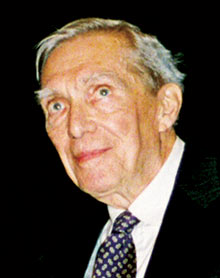 Read my obituary to one of the most original of the scholars of early modern England born between the wars, David Underdown, in the Guardian. Underdown was author of Pride's Purge: Politics in the Puritan Revolution (1971)
 David Underdown looks back to the Tudor age while discussing the upheavals of the mid-17th century, in What Was the English Revolution?